AFRICA CUSTOMS DATA: THE COMPREHENSIVE MARKET ANALYSIS
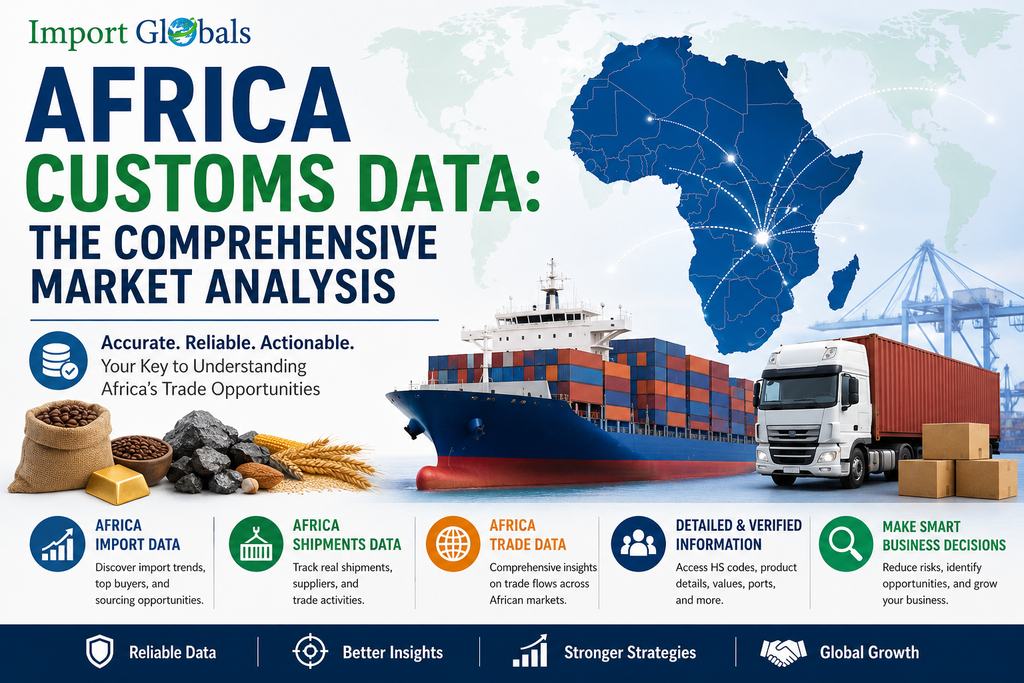
Africa is one of the fastest growing regions in global trade. It has diverse economies, growing consumer markets, rich natural resources and increasing industrial development. The continent plays a big part in world trade, selling minerals, petroleum products, agricultural commodities, machinery, vehicles, chemicals, electronics and consumer goods.
Africa Customs Data helps companies to get valuable insight of the import and export operations in the African markets. Companies can use Africa Import Data, Africa Shipments Data and Africa Trade Data to pinpoint product demand, active buyers and suppliers, monitor competitor activity and evaluate opportunities for international trade.
As the continent’s population grows, infrastructure develops, manufacturing expands and regional trade initiatives take hold, global businesses are finding new opportunities. Detailed customs and shipment data gives importers, exporters, manufacturers, distributors, and market researchers the power to make smarter decisions and build stronger international trade strategies.
THE SIGNIFICANCE OF AFRICA IN WORLD TRADE ACTIVITIES
Africa is a growing region of importance to global trade, due to its natural resources, agricultural production, increasing consumer markets and strategic location. In Africa, countries are actively involved in international تجارة through the import of industrial equipment, machinery, vehicles, pharmaceuticals, electronics and consumer products.
At the same time, African economies are large exporters of crude oil, minerals, metals, agricultural commodities, coffee, cocoa, fruits, textiles, chemicals and other raw and manufactured products. South Africa Import Data provides businesses with a tool to analyze these commercial activities and understand the changing trade patterns between countries and sectors.
International trade is also being supported by infrastructure development, ports and logistics networks, manufacturing facilities and digital trade systems. Good customs intelligence can reveal new markets for companies, how well products are performing and how goods are moving between African countries.
THE COMPLETE PICTURE OF AFRICA IMPORTS
Africa Import Data provides useful information about the commodities imported into the African markets and the companies involved in the international buying activities. This includes a broad array of products that facilitate industrial development, infrastructure, healthcare, agriculture, energy and consumer needs.
The main imports are machinery and mechanical equipment, electrical products, vehicles and automobile parts, mineral fuels, pharmaceuticals, chemicals, plastics, food products and telecommunication equipment.
Africa Customs Data enables businesses to assess the supplier network, identify active importers, measure the shipment frequency, and understand the product demand across various markets in Africa. Africa Shipments Data can also assist companies in tracking international sourcing activity and discovering potential business opportunities.
The continent has a number of important import markets. South Africa, Egypt, Nigeria, Kenya, Morocco, Algeria, Ghana, Tanzania and Ethiopia are all major players in regional and international trade.
AFRICA’S EXPORT MARKETS OVERVIEW
Africa’s export market consists of large reserves of natural resources and agricultural products, as well as growing manufacturing sectors. It ships a broad range of products to locations in Asia, Europe, North America and the Middle East.
Its major exports are crude oil, petroleum products, gold, diamonds, copper, cobalt, iron ore, aluminum, cocoa, coffee, tea, fruits, vegetables, textiles and other farm products.
Africa Trade Data allows companies to track the performance of different countries in exports and find which international markets have increasing demand. Exporters can gather information about destination countries, product trends, shipment volumes and trading partners’ activities to improve marketing expansion strategies.
The growing focus on value addition, renewable energy, industrial development and regional economic cooperation is also likely to open up more opportunities for African exporters. Companies that have access to dependable shipment intelligence can monitor these trends to spot booming industries.
WHAT INFORMATION IS INCLUDED IN CUSTOMS AFRICA DATA?
Africa Customs Data can provide useful shipment level data for international trade analysis. Depending on the country and the customs records available, data may include:
Importer’s name
Name of exporter/supplier
Product description
HS Code
Date of delivery
Amount and unit
Trade value
Co. of origin
Country of destination
Port details
Shipping information Information of the buyer and supplier
This information can enable companies to better understand international supply chains and business activity across African markets.
THE ROLE OF IMPORT-EXPORT DATA PROVIDERS IN BUSINESS DEVELOPMENT
Reputable import export data providers provide detailed trade intelligence to help the companies understand the international markets. The Africa Shipments Data will help you with your market research. It will give you information about product movement, trading companies, suppliers, buyers and international shipment activities.
This information allows companies to identify potential customers, track competitor shipments, analyze sourcing patterns and gage market demand. With Africa Customs Data and Africa Trade Data, companies can develop data-driven business strategies rather than decisions based on assumptions.
Detailed shipment intelligence offers importers and exporters the ability to analyze pricing trends, product demand, supplier performance and opportunities in international markets. This knowledge helps better plan and reduce the uncertainty of entering new African markets.
HOW DOES AFRICA TRADE DATA ON IMPORT AND EXPORT FACILITATE BUSINESS GROWTH?
Global buyer and supplier identification – Identify potential importers, exporters, manufacturers, suppliers, distributors and procurement companies dealing in the particular product categories.
Competitor Shipment Monitoring: Companies can use it to track their competitor’s activities, shipment frequency, destination markets, supplier relationships and product portfolios.
Supply chain optimization Companies may review their global supply chain strategies by looking at supplier reliability, sourcing operations and shipping patterns.
Market Expansion – Africa Import Data and Africa Trade Data help companies to discover the promising markets, emerging industries and new business opportunities.
Pricing and demand analysis – Shipment intelligence can help you understand trade values, product demand, buying behavior and market trends.
LATEST BENEFICIARIES OF AFRICA TRADE DATA
Mining and Minerals Industry – producers of minerals, metals, and natural resources can evaluate international demand and find buyers and active destination markets.
Agriculture and Food Industry – Africa Shipments Data helps agricultural companies to find overseas buyers, analyze commodity demand and track export opportunities.
Manufacturing industry Manufacturers can find suppliers of raw materials, competing products and potential distributors and importers.
Energy industry – examining the international trade activities of entities involved in petroleum, renewable energy and energy equipment can identify growing markets.
Logistics and freight industry: Shipment-level intelligence allows logistics companies to understand cargo movements, trading routes and commercial shipping activities.
HOW IMPORTANT IS THE AFRICA SHIPMENTS DATA FOR INTERNATIONAL TRADE ANALYSIS?
Data on Africa Shipments is an important resource for companies that are monitoring international trade activity across the continent. Data at the shipment level provides much more insight into product flow, buyer and supplier networks, and market opportunities.
Customs intelligence enables importers, exporters, manufacturers, wholesalers and logistics providers to identify reliable trading partners, assess demand for products, monitor competitors and analyze trends in the global market.
Detailed Africa Customs Data helps companies reduce uncertainty and make better decisions. Helps in better analysis of suppliers, better identification of customers, market research and international business planning.
TRADE OUTLOOK FOR THE FUTURE AFRICA’S TRADE INTELLIGENCE
Africa’s role in international trade looks positive, driven by rapid population growth, urbanization, infrastructure development, industrialization and rising consumer demand. Its natural resources, agricultural potential and growing manufacturing capacity are also making the continent more important for global supply chains.
Better logistics infrastructure, digital customs systems and greater use of technology will improve access to trade-related information. Africa Trade Data, customs intelligence and shipment analytics will increasingly help companies to make faster, smarter international trade decisions.
As trade relations between the regions and the world increase, companies with access to real Africa Import Data and Africa Shipments Data can uncover new opportunities and grow their footprint across African markets.
CONCLUSION
Africa is turning into a major player in world trade, driven by its natural resources, agricultural produce, growing consumer markets and budding industrial sectors. The continent offers huge opportunities for importers, exporters, manufacturers, suppliers and international businesses.
Africa Customs Data, Africa Import Data, Africa Shipments Data and Africa Trade Data are rich intelligence for companies looking for buyers and suppliers, tracking competitors, analyzing product demand, and developing effective market expansion strategies.
Reliable shipment-level data will give businesses more insight into African trade activities and enable them to make data-driven decisions for long-term international growth.
CTA
Want to grow your international business in African markets? Import Globals provides you with valuable customs and shipment intelligence for market research and business developement.
Find potential buyers, suppliers, products and market opportunities with detailed Africa Customs Data, Africa Import Data, Africa Shipments Data and Africa Trade Data. Visit www.importglobals.com or email at info@importglobals.com to strengthen your international trade presence while accelerating your global business growth.
FAQs
Q- Why is Africa Customs Data Important?
Ans – Africa Customs Data provides the import-export data that helps companies study trading activities, identify trading partners, monitor market trends, and formulate effective international business strategies.
Que: What is the Africa Trade Data?
Ans – Africa Trade Data can contain importer and exporter name, shipment date, HS Code, product description, quantity, trade value, country of origin, destination country and port details.
Q – How Africa Import Data helps in business growth?
Ans – Africa Import Data allows companies to find out the active importers, examine the importers’ demand for products, assess the activities of suppliers and find new market opportunities.
Que – Who can use Africa Shipments Data?
Ans – Africa Shipments Data can be helpful for importers, exporters, manufacturers, suppliers, distributors, logistics companies, market researchers, and business analysts.
Que – How can businesses use Africa Trade Data to expand their markets?
Ans – Africa Trade Data can help businesses to spot high potential markets, find buyers and suppliers, monitor competitors, analyze demand and enhance market entry strategies.
Que -How frequently is the Africa’ trade data updated?
Ans – ‘Africa’ trade data is updated on a monthly basis.
Que -Where can businesses obtain detailed Africa trade data?
Ans -Visit www.importglobals.com or drop an email at info@importglobals.com to access Africa trade data.